A wallet is the accessory you reach for more than any other. It sits in your pocket every day, it’s the first thing you pull out at the counter, and — done right — it quietly signals that you care about the details. Yet most men buy one on impulse and never think about it again until it falls apart.
This guide walks you through everything worth knowing before you choose: the styles, the leather, the features that matter, and the ones that don’t. By the end, you’ll know exactly which wallet suits the way you actually live.
First, match the wallet to how you carry
There’s no single “best” wallet — only the best one for your habits. Start here.
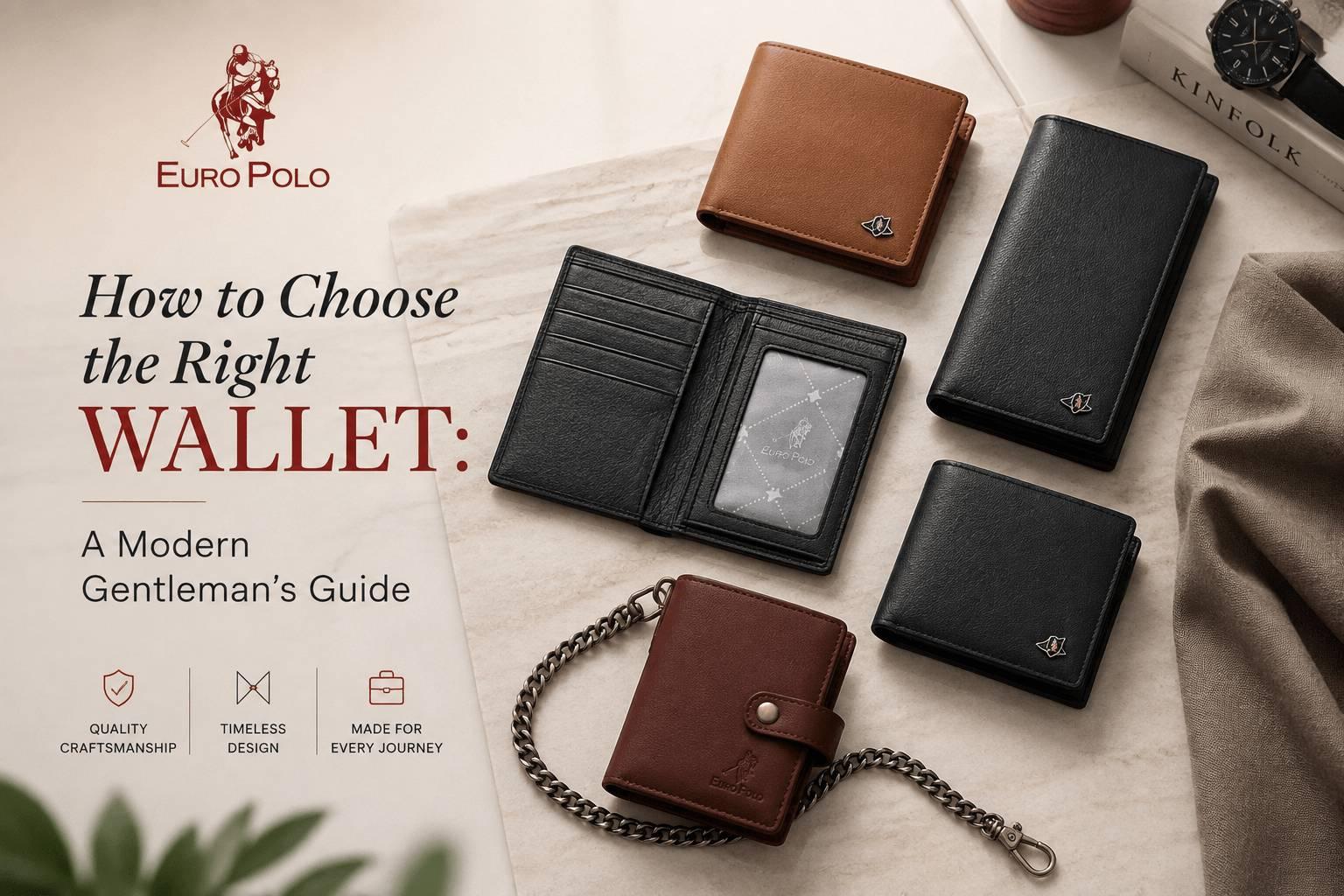
The Bifold — the timeless default. Folds once, holds cash and cards, slips into a back or jacket pocket. If you want one wallet that does everything without fuss, this is it. Look for a slim bifold if you dislike bulk.
The Cardholder — for the minimalist. If you pay mostly by card or e-wallet and rarely carry cash, a cardholder is liberating. It’s slim, light, and disappears into a front pocket. The trade-off: limited space, so you’ll carry only your essentials — which, for many men, is the whole point.
The Long Wallet — for those who carry more. Cash kept flat and uncreased, room for more cards, often a dedicated coin or document section. It pairs naturally with a bag or a suit’s inner pocket rather than a trouser pocket. Choose this if you value organisation and a more formal presence.
Quick rule of thumb: Card-and-phone payer → cardholder. One-wallet-for-everything → bifold. Carry cash, receipts, and want it all in order → long wallet.
The part that actually determines quality: the leather
Two wallets can look identical in a photo and feel like different products in your hand. The difference is almost always the leather.
Full-grain leather is the top tier. It uses the entire, natural grain of the hide, which makes it strong, breathable, and — crucially — it develops a patina: a rich, personal sheen that deepens with years of use. A full-grain wallet doesn’t just wear out; it wears in. This is what you’re paying for in a premium piece.
Genuine leather, despite the reassuring name, sits lower down. It’s real leather, but made from the leftover layers after the top grain is split off, often with a finish applied on top. It’s more affordable and perfectly serviceable, but it won’t age the same way.
A simple test: press the surface gently. Full-grain has subtle natural variation and springs back with life. A heavily coated, plasticky, perfectly uniform surface usually signals a lower grade.
If you buy one thing for the long term, buy the leather. Everything else is secondary.
Features worth paying attention to
Not every feature is a gimmick — a few genuinely improve daily life.
- RFID protection — a shielding layer that blocks unauthorised scanning of contactless cards. Quietly useful if you carry tap-to-pay cards.
- Card capacity — be honest about how many cards you actually use. More slots mean a bulkier wallet; fewer means a slimmer one. Match it to reality, not to “just in case.”
- Stitching — look at the edges. Tight, even stitching is a sign of careful construction and the first thing to fail on a cheap wallet.
- A gift-ready box — if you’re buying for someone else, presentation matters. A proper box turns a wallet into a gift.
How to make it last
A good wallet, cared for, easily lasts years.
- Don’t overstuff it. The single biggest cause of a misshapen, worn-out wallet is cramming it full. Carry what you use.
- Keep it dry. If it gets wet, let it air-dry naturally — never force it with heat.
- Condition occasionally. A light leather conditioner a couple of times a year keeps full-grain supple and prevents cracking.
- Rotate, if you can. Even alternating between two wallets lets the leather rest and lasts longer.
The bottom line
Choose the style for your habits, choose the leather for the long run, and pick only the features you’ll genuinely use. A wallet chosen this way stops being something you replace every year and becomes something you reach for with a little quiet pride.
Explore the Euro Polo Wallet Collection
Crafted leather bifolds, cardholders, and long wallets for the modern gentleman.
Shop Wallets →